
Advocacy
-
Submission to the Draft Sydney Plan
February 2026
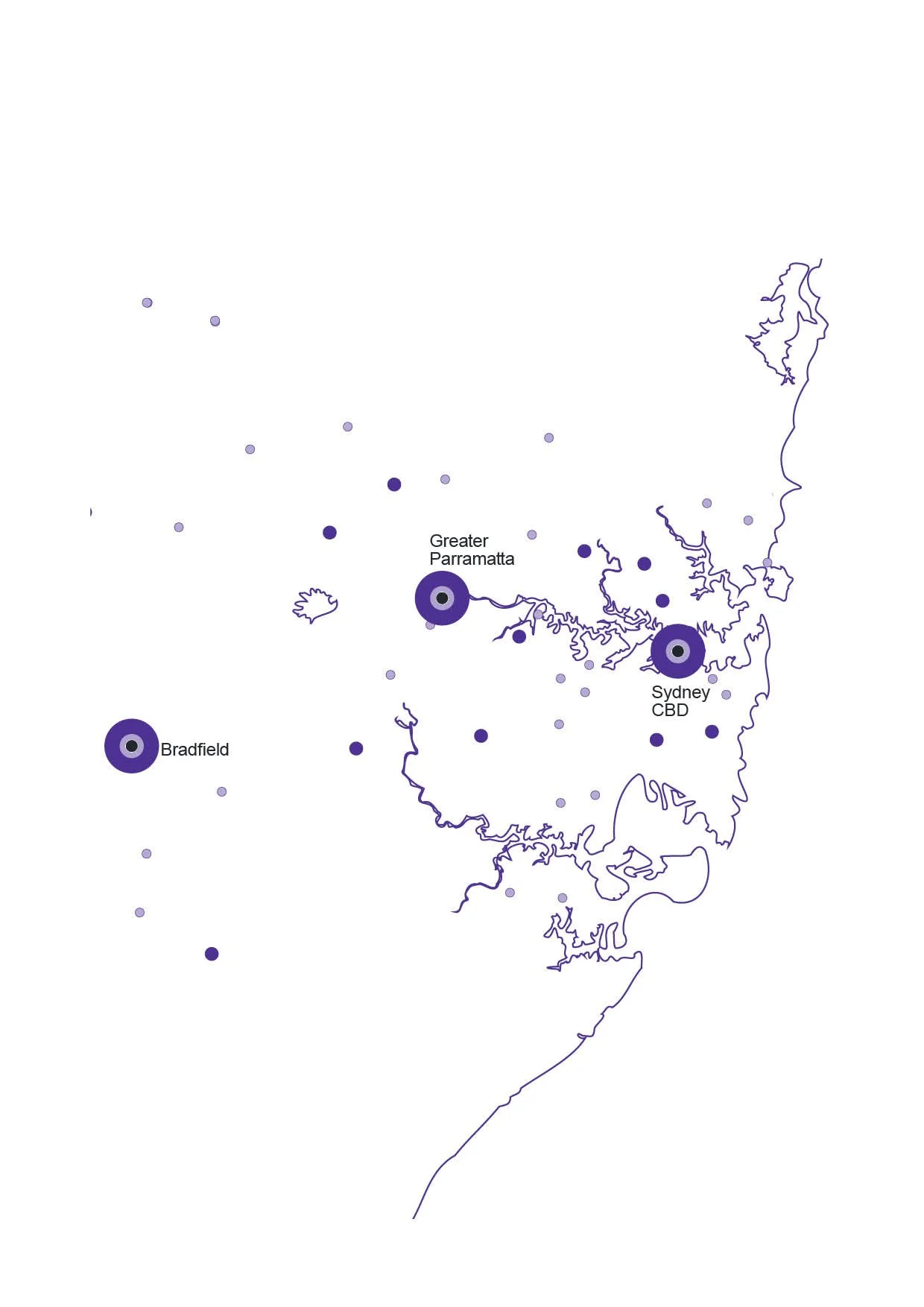
The NSW Government released the Draft Sydney Plan in December 2025. The UDA’s submission to the draft plan looks at the implications of the plan at 3 scales: city scale, local scale and human scale.
-
UDA's Big Idea - Ditch the Poles and Wires
January 2026
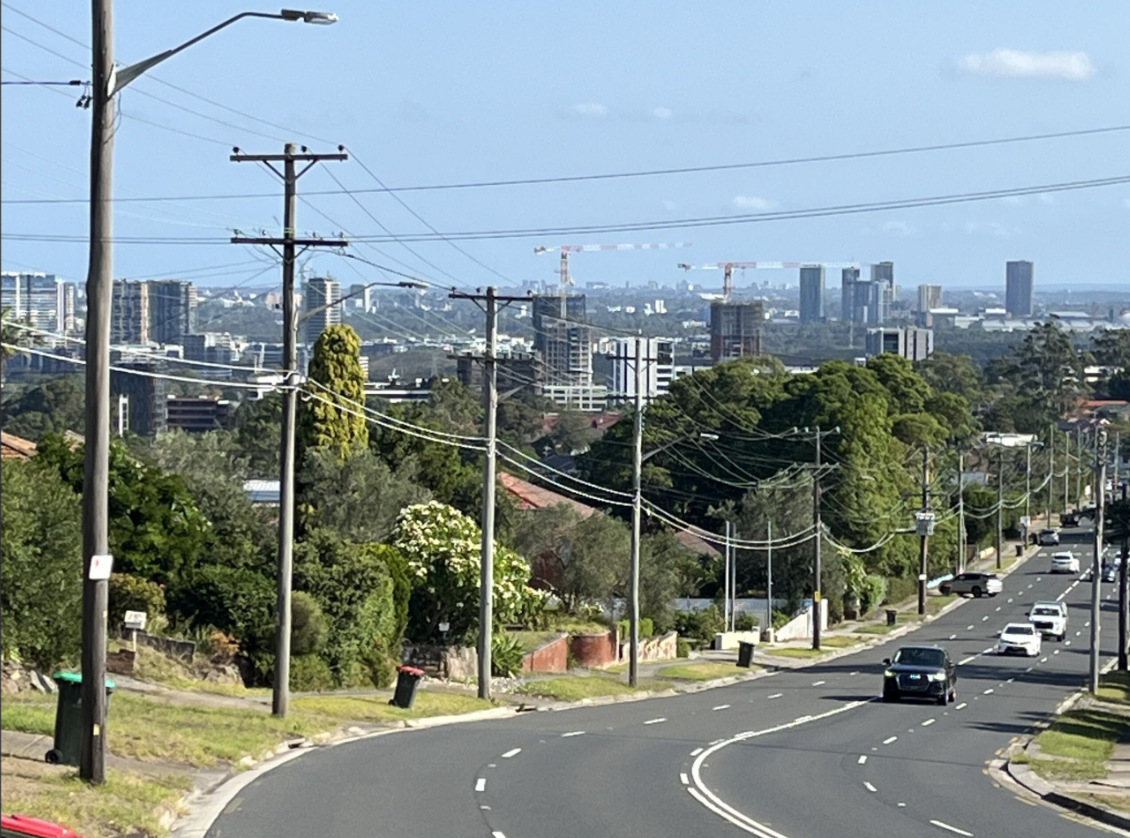
A Big Idea from the Urban Design Association has been selected by the @committeeforsydney and was published in the Sydney Morning Herald. The UDA put forward a bold vision: a 20-year program to underground low-voltage power lines across NSW in the suburbs, towns and cities we love.
Australia’s streets are still tangled in 19th-century infrastructure. Overhead power lines make our neighbourhoods uglier, hotter and less resilient to storms and bushfires, while limiting the street trees we desperately need.
This big idea is about systems thinking: greener, cooler and safer streets; a stronger, more reliable grid for electrified homes, solar and batteries; and cities designed for the 21st century. Western Australia has shown it can be done - now it’s time for NSW to step up.
Modern cities deserve modern power. Let’s ditch the poles and wires.
Use the link below to read the Urban Design Association’s full submission on their Big Idea! -

Urban Designer is now recognised as an occupation
6th December 2024
The Australian Government has released an update to the standard classification for occupations (OSCA) and 241133 Urban Designer at Skill Level 1 is on the list thanks to a concerted effort led by the Urban Design Association of NSW (UDA) and supported by Urban Design Forum, UDAL and many urban designers from around the country.
This is an important step in advancing recognition of Urban Designers as a profession in Australia.
The UDA has been working on this since the middle of 2023 when the government announced a review of ANZSCO. We wrote letters and submissions, set up meetings with other urban design groups from around the country and collected information including the number of people currently employed as urban designers and all the universities currently offering degrees in urban design.
The Occupation Standard Classification for Australia (OSCA) is a standardised framework for occupation related information. It allows the government to collect data on different occupations, like the number of people employed and also track jobs growth, pay and gender equity and skills shortages. Without this category there is no official way of collecting and tracking data on an occupation. For urban designers, being a Government recognised occupation should make many official processes easier such as filling out your census form, visa applications or even a bank loan.
Check out the full description of 241133 Urban Designer by clicking the button below.
-

UDA National Urban Policy Submission
May 2024
The National Urban Policy outlines the Australian Government’s goals for making urban areas liveable, equitable, productive, sustainable, and resilient. This shared vision for sustainable growth in cities and suburbs has been committed to by all Australian Governments.
The UDA is delighted that the Federal Government recognizes the role urban environments play in shaping Australians' lives and meeting challenges to create healthier, equitable, resilient communities. The draft policy outlines the challenges facing Australian cities and urban areas and restates universal goals with supportive objectives and principles. While the UDA supports the intent of the framework, there are concerns about the lack of recognition for the critical role of design and integrated, multi-scale approaches in achieving these aspirations.
The UDA offered observations and recommendations based on our collective experience and similar past national policies, organized under these headings:
Promote Design
Think National, Empower Local
Foster an Integrated Approach
Create Benchmarks that Catalyze
Be Dynamic and Future-Facing
-

UDA NSW Low and Mid-rise Housing Submission
February 2024
The NSW government released an Explanation of Intended Effect (EIE) for a future policy intended to allow low and mid rise housing in more areas within the Six Cities Region. Proposed changes include allowing:
- Six-storey residential flat buildings in R3 Medium Density Residential zones within 400m of train stations or town centre precincts,
- Four-storey apartment buildings in R3 zones within 800m of train stations or town centre precincts,
- Manor homes, terraces and multi dwelling housing in R2 zones within 800m of train stations or town centre precincts, and
- Dual occupancies throughout R2 Low Density Residential zones.
The UDA supports a diverse range of housing types, urban intensification in the right locations, and the proposal to include dual occupancies in R2 zones. However, the UDA is also concerned that these controls will not always further the stated objectives of the EIE, creating unintended consequences that could lead to poor built outcomes, browner streetscapes and community backlash.The submission proposed practical recommendations to assist the government in delivering the housing NSW needs.
